
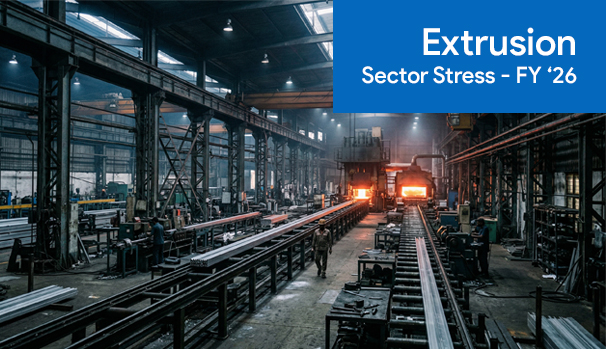
In Brief: India’s aluminium extrusion sector is facing one of its worst disruptions in recent years. A fuel supply crisis triggered by the West Asia conflict has forced production cuts of 40–70% across hundreds of units. Gas costs have nearly doubled, at least 25 plants have shut entirely, and monthly output has fallen from 1 lakh tonnes to as low as 45,000–60,000 tonnes. For procurement managers sourcing aluminium extrusions, profiles, or downstream products in India, the implications are immediate: tighter availability, longer lead times, and upward pricing pressure. This article explains what is happening, why it matters to your supply chain, and how to plan accordingly.
What Is Happening in India’s Aluminium Extrusion Sector Right Now?
India’s aluminium extrusion industry — worth an estimated ₹32,000 crore in annual revenue and representing around 450–500 companies — is currently operating well below capacity. The Aluminium Extrusion Manufacturers Association of India (ALEMAI), which represents roughly 250 of these companies, flagged a severe crisis in March 2026: production across key clusters in Gujarat, Maharashtra, Delhi-NCR, and Bengaluru has been slashed by 40 to 50 percent.
The root cause is a fuel supply shock. Aluminium extrusion is an energy-intensive process that depends on consistent high-temperature furnaces — typically powered by liquefied petroleum gas (LPG) or piped natural gas (PNG). The escalating West Asia conflict has severely disrupted both the supply and pricing of these fuels in India. LPG supplies to many industrial units have been virtually halted, while PNG allocations have been curtailed to 50–80 percent of normal levels in several regions — which ALEMAI describes as simply not enough to sustain operations.
The numbers make the situation plain: at least 25 extrusion units have shut down completely. Nearly 200 others are running at sharply reduced capacity. Monthly industry output, which averaged around 1 lakh tonnes, has fallen to an estimated 45,000–60,000 tonnes. Against an installed capacity of 4.2 million tonnes annually, actual utilisation has dropped to as low as 30–40 percent.
How Did the West Asia Crisis Affect Indian Aluminium Supply?
The Fuel Cost Squeeze
The conflict in West Asia — which accounts for approximately 9 percent of global primary aluminium production — has simultaneously disrupted India’s fuel imports and spiked global energy costs. For extrusion manufacturers, this has translated into a direct cost crisis.
Gas prices have nearly doubled. Reports from plant operators indicate that PNG costs have surged from around ₹52 per standard cubic metre to close to ₹90. Alternative fuels like low-sulphur heavy stock (LSHS) and furnace oil have also risen sharply. For context, conversion costs — the cost of processing aluminium billets into extruded profiles — have surged by approximately 25 percent across the sector.
The Raw Material Disruption
The crisis is not limited to fuel. West Asia is also a critical source of raw materials for India’s aluminium extrusion supply chain. The conflict has led to container unloading halts at West Asian ports, choking raw material inflows. Approximately 50 percent of the sector’s raw material imports from the region are now affected, further compounding the production constraints.
The MSME Vulnerability
India’s aluminium extrusion sector is overwhelmingly composed of micro, small, and medium enterprises — MSMEs account for 90 percent of ALEMAI’s membership. These businesses operate on thin margins, depend heavily on working capital loans, and have limited ability to absorb sustained cost shocks. ALEMAI has urged the government for Covid-era style relief, including loan moratoriums, deferred interest payments, reduced interest rates, and government-backed low-cost working capital loans. Without intervention, the association warns that the sector risks widespread defaults on term loans and working capital facilities.
What Does This Mean for Buyers and Procurement Managers?
If your business sources aluminium extrusions, profiles, rods, sections, or any downstream fabricated products from Indian manufacturers, this disruption has direct consequences.
Lead Times Will Stretch
With hundreds of extrusion units running at 30–70 percent capacity, order queues at functioning plants will lengthen significantly. Products that previously had a 2–3 week lead time may now face delays of 4–6 weeks or more, particularly for custom profiles and non-standard dimensions. Planning procurement cycles around pre-crisis timelines will create sourcing gaps.
Pricing Pressure Is Real
Conversion costs have risen 25 percent across the board. While not all of this will be passed on immediately — competition and contract terms will determine how much — buyers should expect upward revision in quotes, particularly for orders placed in Q2 2026. The longer the fuel crisis persists, the more deeply this cost increase gets embedded in pricing structures.
Availability for Standard Profiles May Tighten
Extruders still operating will prioritise high-volume, standard profiles over custom runs to maximise output efficiency. Buyers requiring specialised cross-sections or tight-tolerance profiles may face greater difficulty finding available capacity in the short term.
Downstream Products Are Also Affected
The impact is not confined to direct extrusion buyers. The electric vehicle sector, solar energy equipment manufacturers, construction firms using aluminium fenestration and cladding systems, and industrial equipment makers all depend on extruded aluminium. Price increases are already being reported across these sectors, with electric two-wheeler manufacturers including Bajaj Auto and Ather Energy signalling price hikes.
Frequently Asked Questions About India’s Aluminium Extrusion Crisis
Why is India’s aluminium extrusion sector facing a fuel shortage in 2026?
The escalating West Asia conflict has severely disrupted India’s imports of LPG and PNG — the primary fuels used in aluminium extrusion furnaces. The Ministry of Petroleum and Natural Gas has also prioritised household fuel supply over industrial allocation in some regions, further reducing availability for manufacturers.
Which regions in India are most affected by the aluminium extrusion slowdown?
The most significant disruptions have been reported in Gujarat (Ahmedabad), Maharashtra (Pune and surrounding clusters), Delhi-NCR, and Bengaluru — the four largest hubs for aluminium extrusion manufacturing in India.
How much have aluminium extrusion production levels dropped in India?
According to ALEMAI, monthly output has fallen from approximately 1 lakh tonnes (100,000 tonnes) to around 45,000–60,000 tonnes — a reduction of 40–50 percent from normal operating levels.
Will aluminium extrusion prices rise in India due to this crisis?
Yes, pricing pressure is already visible. Conversion costs have increased by approximately 25 percent due to fuel cost inflation, and raw material availability constraints from West Asia are adding further upward pressure. Buyers should factor this into procurement budgets for Q2 and Q3 2026.
How long will the aluminium extrusion supply disruption last?
The duration of the disruption is directly linked to geopolitical developments in West Asia and the pace at which Indian fuel supply chains stabilise. Industry bodies are seeking government intervention, but no confirmed timeline for normalisation has been established as of April 2026.
What Should Procurement Teams Do Right Now?
The situation is fluid, but a few actions can meaningfully reduce supply chain risk over the next two quarters.
1. Lock in inventory where possible. If you have standard profiles or recurring requirements, placing larger forward orders with confirmed suppliers now — rather than waiting — can protect you from both price increases and availability gaps.
2. Review your supplier base. Not all extrusion units are equally affected. Larger, better-capitalised manufacturers with diversified fuel access or alternate energy arrangements may be maintaining closer-to-normal output. Knowing exactly which of your suppliers fall into this category is valuable intelligence right now.
3. Consider alternative product forms. Depending on your application, aluminium sheets, plates, or drawn tubes may be substitutable for certain extruded profiles. Stockists with strong inventory across product categories can help identify viable alternatives without compromising specifications.
4. Build buffer stock for critical items. Components that are difficult to substitute and critical to your production or project timelines deserve buffer inventory for the next two quarters at minimum.
5. Engage your suppliers proactively. Don’t wait for suppliers to come to you with bad news. Reaching out now to understand their current capacity, queue lengths, and pricing outlook gives you more time to course-correct.
The Broader Context: A Structural Warning
It would be easy to read this crisis as a short-term disruption — something to manage and move on from once the geopolitical situation stabilises. But the aluminium extrusion crisis of 2026 is also a structural warning that India’s procurement ecosystem would do well to heed.
India’s extrusion sector has an installed capacity of 4.2 million tonnes but historically utilises only around 1.2–1.3 million tonnes. The remaining capacity sits idle not because demand is absent, but because of persistent structural inefficiencies — high energy costs, MSME working capital constraints, import competition from ASEAN markets, and now geopolitical supply shocks. India’s per capita aluminium consumption stands at just 4 kg, compared to 25 kg in China and 18 kg in the United States. The gap between installed capacity and actual output, and between India’s current consumption and its long-term potential, represents both the scale of the problem and the scale of the opportunity ahead.
For buyers, this means that the current crisis — painful as it is — should accelerate a longer-term rethinking of supply chain resilience: fewer single-source dependencies, stronger supplier relationships, and procurement strategies built around material knowledge, not just price.
How Pratham Traders Can Help During This Period
As one of Mumbai’s established aluminium stockists and suppliers, Pratham Traders maintains ready inventory across a wide range of aluminium product forms — sheets, plates, coils, rods, bars, and blocks — in multiple grades including 1100, 5052, 6061, 6082, 7075, and 2024 aluminium.
During periods of extrusion supply stress, our stocked inventory provides procurement teams with a reliable alternative or supplement to extruded product sourcing. Whether you need to substitute profiles with sheet-based fabrications, maintain buffer stock for ongoing requirements, or simply ensure supply continuity while your extrusion suppliers recover capacity — our team can advise on the most practical path forward.
Get in touch with the Pratham Traders team to discuss your current requirements and how we can support uninterrupted supply during this period.
Conclusion: Plan for Disruption, Not Against It
India’s aluminium extrusion sector is under genuine stress in 2026. The combination of a West Asia-driven fuel crisis, raw material supply disruptions, rising conversion costs, and MSME financial fragility has created a supply chain environment that requires active management rather than passive procurement.
The buyers who navigate this period best will be those who act early — locking in stock, diversifying their supplier base, and leaning on stockists with reliable inventory. The buyers who struggle will be those who assume the situation will resolve itself on a convenient timeline.
Aluminium remains a cornerstone of India’s construction, infrastructure, automotive, and renewable energy sectors. The underlying demand is not going away. But the path to securing the material you need, at the price and timeline you expect, now requires more deliberate planning than it did a year ago.
Pratham Traders is a leading aluminium supplier based in Mumbai, serving industrial buyers across India with a comprehensive inventory of sheets, coils, plates, rods, and bars in multiple alloys and tempers.