
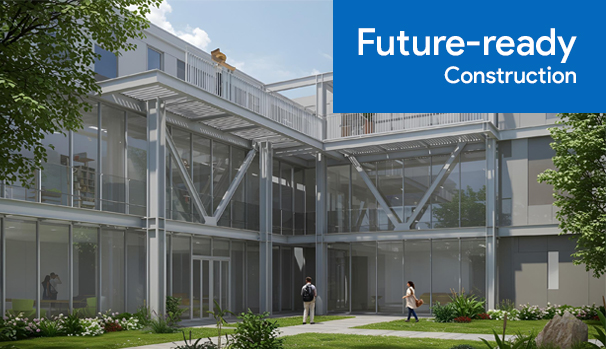
In Brief: As India accelerates toward sustainable development, construction practices are undergoing a fundamental shift. Green buildings now prioritise energy efficiency, durability, recyclability, and lower environmental impact. Aluminium has emerged as a critical material enabling this transition, offering a unique balance of strength, longevity, and sustainability across modern construction projects.
The construction sector is one of the largest contributors to global carbon emissions and resource consumption. In India, rapid urbanisation, infrastructure expansion, and housing demand have intensified the need for materials that support long-term sustainability without compromising structural performance.
Green building frameworks increasingly focus on reducing embodied carbon, improving energy efficiency, and extending the lifecycle of buildings. Aluminium plays a vital role in achieving these goals. From façades and roofing systems to structural elements and window frames, aluminium is now integral to sustainable construction strategies across residential, commercial, and infrastructure projects.
As experienced aluminium suppliers in Mumbai and across India, Pratham Traders works closely with builders, architects, and contractors to supply aluminium products that align with green building objectives.
Why Aluminium is a Sustainable Construction Material
Aluminium’s sustainability is not based on a single attribute but on a combination of material characteristics that support environmental performance throughout a building’s lifecycle.
1. High Strength with Low Weight:
Aluminium offers an excellent strength-to-weight ratio. In construction, this allows for lighter structural systems without sacrificing performance. Reduced weight lowers foundation loads, cuts transportation emissions, and simplifies on-site handling—all of which contribute to a smaller carbon footprint during construction.
2. Exceptional Durability and Long Service Life:
Buildings designed for sustainability must last longer with minimal maintenance. Aluminium resists corrosion, moisture, UV exposure, and environmental degradation far better than many traditional materials. This durability reduces the need for replacements, repairs, and repainting, directly lowering long-term resource consumption.
3. 100% Recyclability Without Quality Loss:
One of aluminium’s strongest sustainability advantages is its recyclability. Aluminium can be recycled repeatedly without losing its mechanical properties. In fact, a significant portion of aluminium used in construction today comes from recycled sources, requiring only a fraction of the energy needed for primary production.
Aluminium’s Role in Green Building Design
Aluminium supports sustainable construction not only as a structural material but also as a design enabler.
1. Facades and Cladding Systems:
Aluminium façade systems help regulate building temperature by reflecting heat and allowing for ventilated designs. They contribute to improved thermal performance while offering flexibility in modern architectural aesthetics.
2. Windows, Doors, and Curtain Walls:
Aluminium frames support high-performance glazing systems that improve insulation and daylighting. When combined with thermal breaks and energy-efficient glass, aluminium windows and curtain walls significantly reduce heating and cooling loads.
3. Roofing and Structural Components:
Lightweight aluminium roofing and support systems reduce structural stress and are well-suited for both commercial and residential buildings. Their resistance to weathering ensures consistent performance over decades.
Energy Efficiency and Operational Sustainability
Green buildings focus heavily on reducing operational energy use, and aluminium plays a key role in this area.
1. Thermal Performance:
Aluminium systems can be engineered to minimise heat transfer when used with insulation and thermal break technology. This improves indoor comfort and reduces reliance on air conditioning and heating systems.
2. Daylighting and Reflectivity:
Aluminium’s reflective properties help optimise daylighting in building interiors. This reduces the need for artificial lighting, lowering electricity consumption and enhancing occupant comfort.
Aluminium in Sustainable Infrastructure and Urban Development
Beyond individual buildings, aluminium contributes to sustainable urban infrastructure.
• Public transport structures, such as metro stations and terminals, use aluminium for durability and low maintenance
• Pedestrian bridges and walkways benefit from aluminium’s corrosion resistance and lightweight construction
• Modular construction systems rely on aluminium components for faster assembly and reduced material waste
As Indian cities expand, aluminium supports infrastructure that is both resilient and environmentally responsible.
Lifecycle Benefits: From Construction to End of Life
Sustainable materials must perform well across the entire lifecycle of a structure.
1. Lower Embodied Carbon:
While aluminium production is energy-intensive, its long lifespan and recyclability significantly offset initial emissions. Over time, aluminium structures often outperform materials that require frequent replacement or heavy maintenance.
2. End-of-Life Recovery:
At the end of a building’s life, aluminium components can be efficiently recovered and reused. This aligns with circular economy principles, reducing landfill waste and conserving natural resources.
Why Aluminium Matters for India’s Green Building Goals
India’s green building initiatives emphasise energy efficiency, material efficiency, and long-term performance. Aluminium aligns well with these priorities, especially in India’s diverse climate conditions — from coastal humidity to extreme heat.
Builders and developers increasingly choose aluminium to meet sustainability benchmarks while ensuring durability and compliance with modern construction standards.
The Role of Reliable Aluminium Suppliers
Sustainable construction depends not only on material choice but also on supply reliability and quality consistency. Certified sourcing, correct alloy selection, and proper handling are critical to ensuring aluminium performs as intended in green building applications.
Pratham Traders, as one of the trusted aluminium suppliers in Mumbai, supports sustainable construction projects by providing:
• Aluminium sheets, plates, coils, strips, and profiles
• Consistent grades and verified quality
• Technical guidance for construction and architectural applications
• Reliable supply for both small and large-scale projects
Conclusion
Sustainable construction is no longer a niche approach—it is becoming the standard for modern development. Aluminium plays a central role in this transition by offering durability, recyclability, energy efficiency, and design flexibility.
From green buildings to urban infrastructure, aluminium enables construction that is lighter, longer-lasting, and more environmentally responsible. As India continues to build for the future, aluminium will remain one of the key materials shaping sustainable and resilient cities.
At Pratham Traders, we remain committed to supplying high-quality aluminium solutions that support sustainable construction and long-term value.
Frequently Asked Questions (FAQs)
1. Why is aluminium considered a sustainable material in construction?
Aluminium is considered sustainable because it is lightweight, highly durable, and 100% recyclable without loss of quality. Its long service life and ability to be reused multiple times help reduce material waste and overall environmental impact in construction projects.
2. How does aluminium improve energy efficiency in green buildings?
Aluminium improves energy efficiency by supporting high-performance façades, windows, and roofing systems. When combined with insulation and thermal breaks, aluminium helps reduce heat gain and loss, lowering the building’s dependence on artificial heating and cooling.
3. Where is aluminium commonly used in sustainable construction projects?
Aluminium is widely used in façades, cladding systems, windows, doors, curtain walls, roofing, and lightweight structural components. It is also used in green infrastructure such as pedestrian bridges, metro stations, and modular building systems.